Week 6/7 Photographer Research:
Looking through the Magnum Photos website I fell upon this photographer called Leonard Freed and his ‘Police Work’ series which is done in black and white. On the Magnum website this series was linked through a series done by magnum called ‘Making the Image’ this is were Leonard expand about how he chose his images linking a couple contact sheet of this project. He doesn’t have his own website and was a member of the Magnum Photos Agency until he passed on 29 November 2006. He is well known for his coverage on the Civil Rights Movement in 1963.
This project/ photo series was published as a book in 1980 and was taken in New York City and featured the New York City Police. This series documents the Police Department during the 1970’s. The early part of this decade was a very tough for the New York Police Department as: they had been charged with widespread corruption and racketeering in ‘Detective Frank Serpico’s 1971 testimony‘ to the ‘Knapp Commission Case’, the target of anti-Vietnam War demonstrators’ had increased and the NYPD faced both soaring crime rates and huge budget cuts. this series captures what police have to go through on a weekly basis and the different kind of people that they have to interact with.
Example 1:
Leonard Freed- Police Work:
https://www.magnumphotos.com/newsroom/police-work-leonard-freed-magnum-photos/
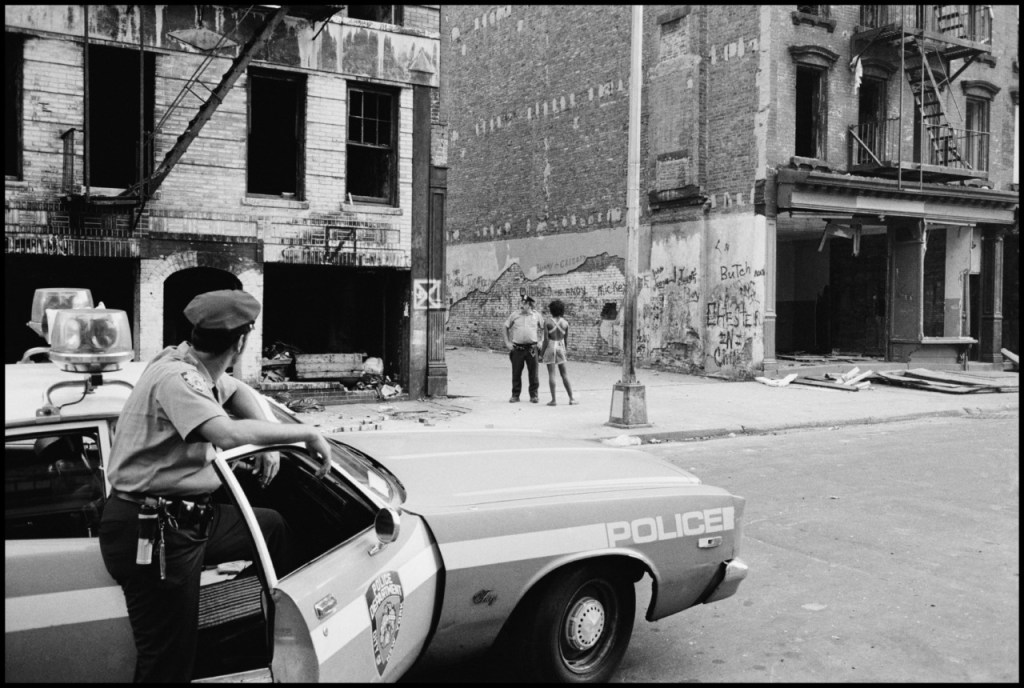
The image was taken by standing near to the police car and policeman that are in the foreground and aren’t in focus you can see in the distance are another policeman facing towards the camera but looking down the street with his hands on his hips and a woman facing away from the camera and facing the policeman and are both in focus in this photograph.
The policeman in the foreground links the other 2 figures in the image as he is looking in their direction causing us to do the same. The 2 buildings act as leading lines towards the 2 figures in the middle also causing you to look at them. The high contrast of the shadows of the car in the foreground and the dark clothing and hair of the people in the background also make them pop from the lighter shades of the walls and pavements. All of these factors allow the photograph to be read form the bottom left to the top right.
I think that he used a wide angle lens and is shooting with a f-stop of f16-20 which may vary. The focus of the image is all on the buildings and the 2 figures in the background and not the policeman and vehicle in the foreground. As a result also draws attention to the centre of the image. The photograph is being lighted by natural lighting.
Example 2:
Leonard Freed- Police Work:
https://www.magnumphotos.com/newsroom/police-work-leonard-freed-magnum-photos/
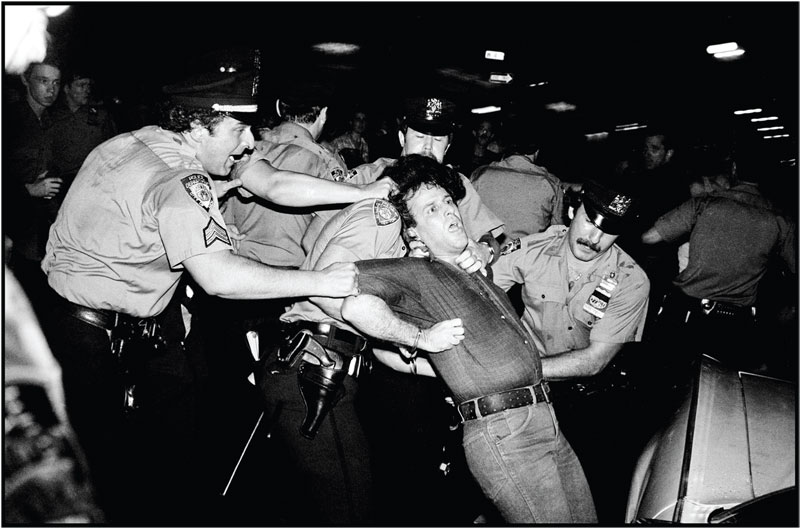
This photograph was taken standing a metre or 2 way from the figure being dragged away by police (in the centre of the photograph) who is in focus; and was taken outdoors at night time. This figure is surrounded by 6 policeman. What draws you into the middle of the photograph is the mans face as it is the only face that you can make eye contact with and see fully with you it being covered by a hat brim or shadowing. Also the contrast between his darker clothing against the light police uniform. What also makes the image pop out is the dark background contrasting against the light coloured uniforms of the police.
This photograph is being lit by flash.
Example 3:
Leonard Freed- Police Work:
https://www.magnumphotos.com/newsroom/police-work-leonard-freed-magnum-photos/
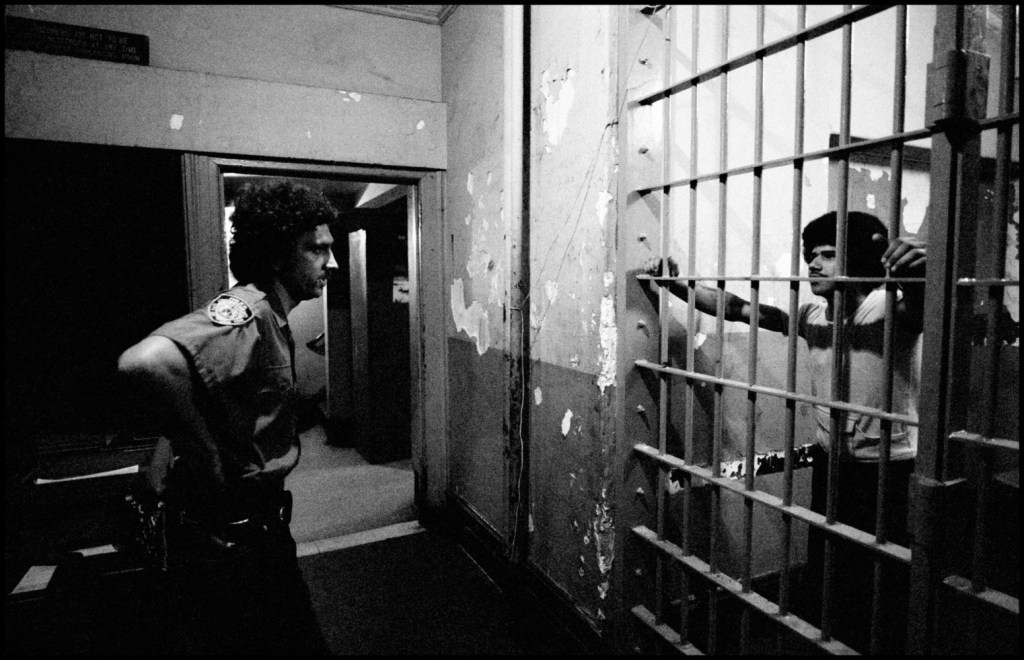
This photograph was taken near the policeman outside from the jail. What draws you into the image is the jail bars and wall connected to it act as leading lines towards the person inside the jail; which then draws you to look from the right to the left of the image towards the policeman who is making eye contact with the individual in the jail. the contrast captures the emotions of the what both the officer and the inmate are feeling really well in this moment.
 Alicia Newman PJ&DP Course